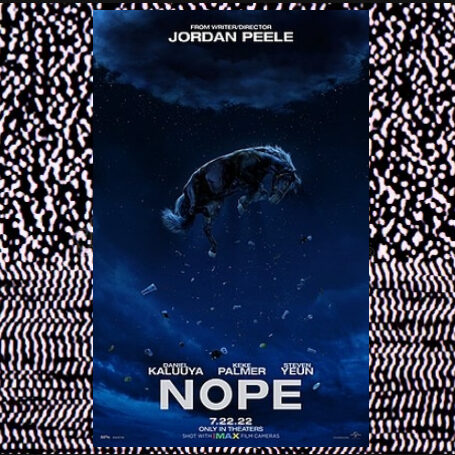
Release: 2022
Director: Jordan Peele
Writer: Jordan Peele
Genre: Horror/Sci-fi
“And I will cast abominable filth upon thee, and make thee vile, and will set thee as a spectacle”
Spectacle; read or listen to any discussion of Jordan Peele’s 2022 film and you’ll hear this word. By opening the film with this particular Bible verse (Nahum 3:6), he intentionally presents it as a concept tying together the events that follow. But what does spectacle mean to Peele, based on the story he builds around it? We can try to answer this by considering how ‘spectacles’ are depicted in each act of the film, and importantly how they equate to ‘abominable filth’ and ‘vile’ as they do in the verse above. In addition to this opening verse, the film is divided by other title cards, each displaying the name of an animal (loosely defined) significant to the film. If the title cards collectively structure the film, each animal’s role in the story therefore functions to illustrate Peele’s statement about spectacle.
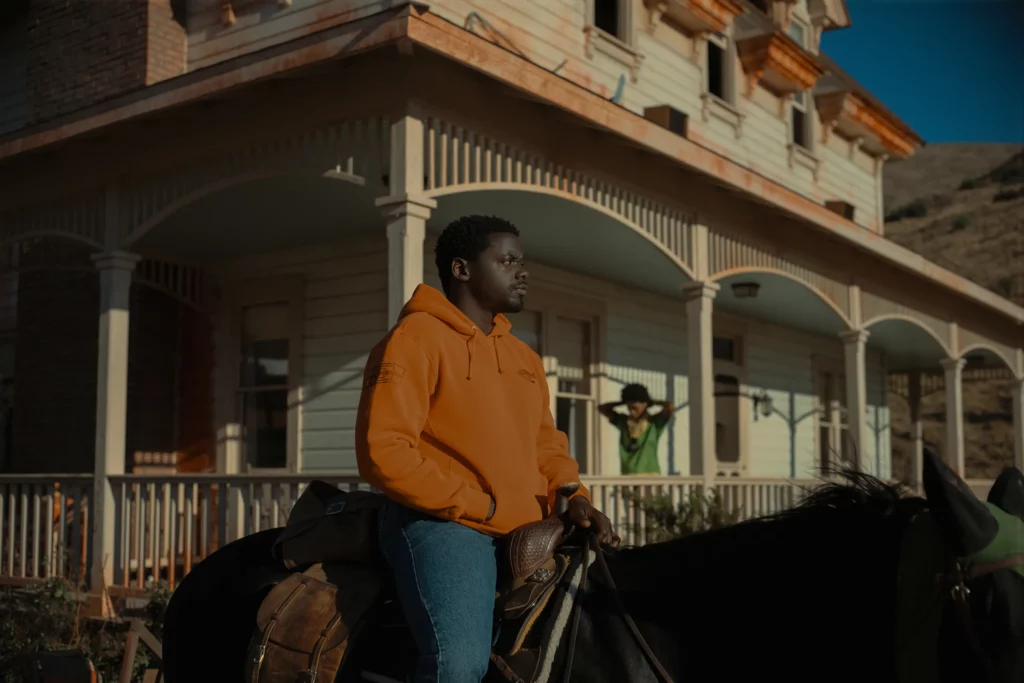
LUCKY is a favoured horse of the protagonists, OJ and Emerald Haywood, who have inherited their father’s business that trains and provides horses for film productions. During a scene in which it has been brought to set to film a commercial, Lucky introduces the motivating needs of the siblings (to make a living through their animals, and have their efforts recognized in the entertainment industry), and the conflict that obstructs these (the unpredictability of animals they rely on to go under the spotlight). The moment Lucky compromises their gig by lashing out on set after being startled (by seeing its own eye reflected, a detail we should keep in mind) hints at the film’s central theme played out by the characters: spectacle, when systematized as a business, relies on the enforced restraint of a subject. As much as the siblings care for their horses, OJ in particular, they must depend on the labour and restraint of these animals as novelties under Hollywood cameras. While introducing Haywood’s Hollywood Horses, Emerald asserts that the first film was of “a black man on a horse” who was also their ancestor; this brings up a whole other theme, regarding the lack of acknowledgement of marginalized communities within the entertainment industry’s history and the desire for such recognition. As a small family business, the Haywoods have to assert themselves as much as they can, but they are also restrained almost to the same extent as their horses, as shown in how OJ wearily tries to protect Lucky from the invasiveness of the employers that they must appease.
GORDY is the name of the chimpanzee protagonist of now-infamous 90s sitcom Gordy’s Home, but in the present day of the film’s universe now refers to the chimp actor (one of several) that was accidentally provoked to on-set rampage while portraying the character, causing carnage and the deep-seated trauma of former child star Jupe. This incident is the starkest case made by the film, of spectacle (as represented by the entertainment industry) relying not only on the restraint of subjects, but on their exploitation as a natural consequence. Not only has ‘Gordy’ clearly been exploited, as a wild animal expected to act restrained and perform under lights and a studio audience, but so have his human costars who fall victim to his outburst while trying to make their living on this show. Despite coming out of the incident physically unscathed, Jupe is clearly fixated on it to the extent that it shapes his adult life; he revels in the media attention that followed, and keeps memorabilia from the show displayed in his home. His child stardom (a form of exploitation in its own right) has led him to seek the same level of fame, which culminates in his luring the mysterious creature that the Haywoods have also been trying to capture towards his paying audience. As far as the film represents him, Jupe begins and ends with an ‘animal’ destroying those that were exploiting it for its spectacle, though he has shifted from exploited to exploiter. The course of his life as shaped by ‘Gordy’ suggests that exploitation is inherent to spectacle, and avoiding being subjected to it means inflicting it on another.
JEAN JACKET is the main event of the story, the film’s own spectacle beyond the universe of the characters. It is the alien creature they discover in the sky, and name after one of the horses, which the Haywoods seek to get the first photo of. As it is given the same significance as Lucky and Gordy, Jean Jacket is meant to be understood as an animal like they are, and therefore a subject of spectacle. This calls into question the morality of our protagonists, and the integrity of the film as social commentary: are the Haywoods right to seek fame by disturbing this creature, and is the film hypocritical to include so much spectacle itself? Peele seems aware of these moral inconsistencies, as the characters half-heartedly argue that they are doing the right thing by raising awareness, and the film isn’t shy about leaning into horror and western imagery. Maybe it can have its cake and eat it too, striking us with traumatic moments resulting from exploitation, while still being an exciting neo-western. Let’s return to the opening Bible verse. Peele wants us to think of spectacle as synonymous with being put upon with filth and made vile, which is shown to mean exploitation- it is inherent and even necessary to create a spectacle. But who is the ‘I’? It is shown to be unnamed directors and film crew, representing the modern entertainment industry, but it’s also those who have been or are being exploited themselves, and are trying to succeed in a system that requires someone’s exploitation. Spectacle is needed for success, which makes for a morally dubious industry, which reflects back on us as we enjoy it. Peele can’t fix this system, but he can represent to us what is broken about it. As voyeuristic as this film allows us to be, it is staring right back at us, like our own eye in a reflection.